Izuchukwu
Precious Obani

A multidisciplinary leader and philanthropist, he combines corporate leadership, sustainability research, and social care governance, serving as Director of ZETC Limited and within Ofsted-regulated settings.

A Leader Across Disciplines

Dr. Izuchukwu Precious Obani is a sustainability strategist, corporate leader, and civic contributor whose work focuses on environmental governance, sustainable enterprise, and institutional development. His professional background combines leadership experience in both corporate and regulated care environments with a strong emphasis on sustainability policy and practical governance frameworks.

He serves as Director of ZETC Limited , where he is involved in strategic planning, business development, and organisational governance across multiple regions. He also brings prior experience within the UK’s Ofsted-regulated social care sector, where he held responsibilities in compliance, safeguarding, and operational leadership.

His work and commentary on sustainability, climate governance, and ethical enterprise have been featured across platforms including The National Day, Business Vanguard, and Independent Nigeria, among others.

He is actively engaged in civic and humanitarian initiatives through the Rotary community (District 9141) , where he has led initiatives focused on community development and service. He also holds the traditional title Akunesiobike n’ Ibeku, reflecting his cultural heritage and commitment to community leadership.

10+

Masters Students\nMentored

5+

Countries ZETC\nOperates In

Rotary Excellence\nAward

Dr Izuchukwu Precious Obani
Dr Obani at an event
Dr Obani — community and civic leadership

Akunesiobike n’ Ibeku

Recent Publications

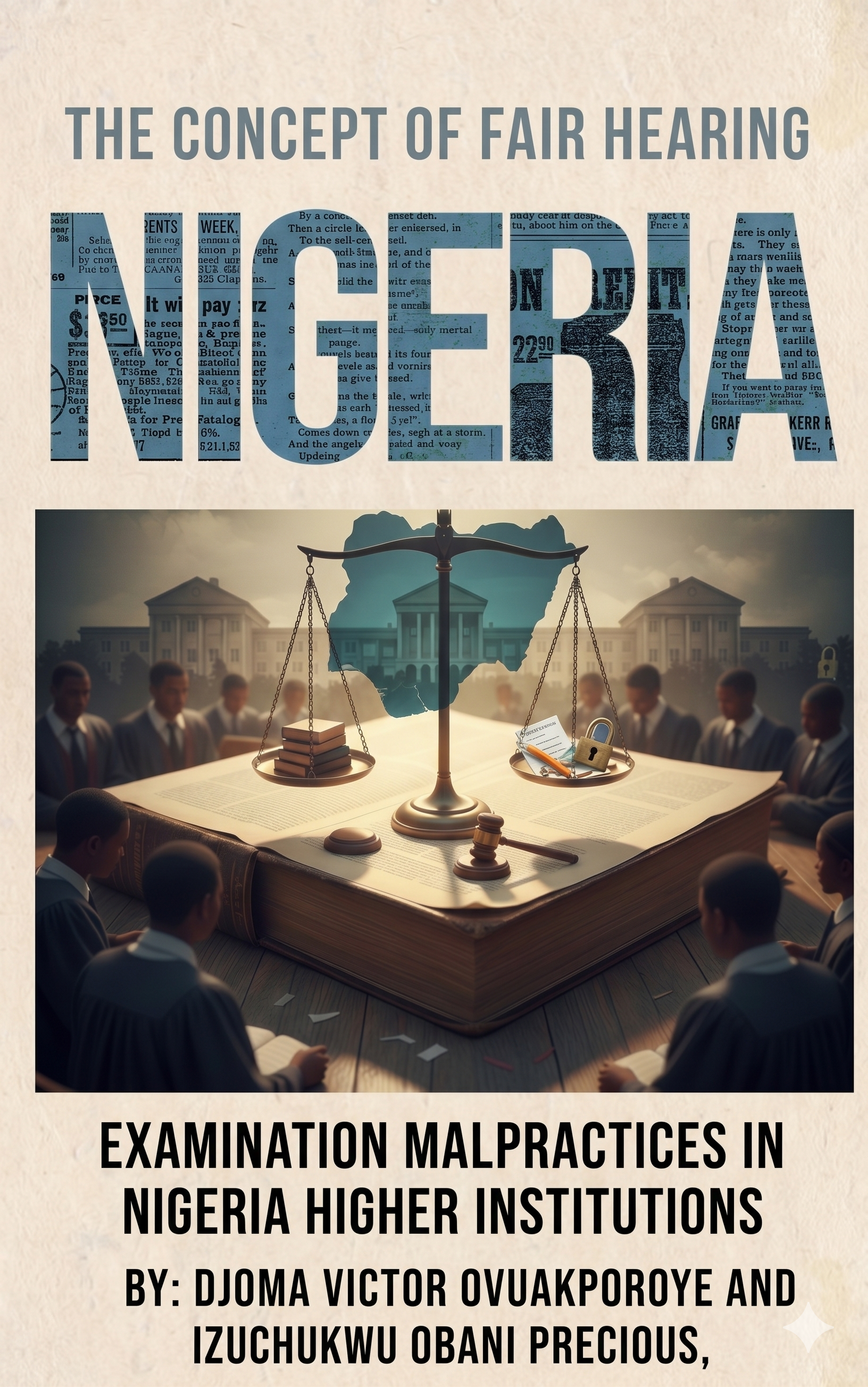
THE CONCEPT OF FAIR HEARING AND EXAMINATION MALPRACTICES IN NIGERIA HIGHER INSTITUTIONS

Djoma Victor Ovuakporoye, Obani Izuchukwu Precious

Fairness in examinations is a central ethical principle that sustains trust in educational systems and ensures that learners are assessed equitably on the basis of merit. Examination malpractices, however, undermine this principle by distorting assessment outcomes and eroding integrity in both education and society. Such malpractices include impersonation, leakage of questions, bribery, collusion, and the misuse of technology. This paper examines the concept of fairness and the persistence of examination malpractices in Nigerian tertiary institutions, with attention to their ethical, human rights, and developmental implications. The study adopts a critical analytic and descriptive method, drawing on relevant literature, policy documents, and case examples from Nigerian higher institutions to interrogate the underlying causes of examination malpractices and their impact on academic integrity. The paper finds that weak institutional frameworks, poor value orientation, inadequate supervision, and the misuse of digital technologies have deepened the problem, threatening fair assessment, promoting corruption, and undermining students’ learning outcomes. It further observes that although technological tools such as Artificial Intelligence (AI) and e-proctoring can help to curb malpractice, they require ethical deployment and human accountability. The paper concludes that fostering fairness in examinations requires a combination of value-driven education, transparent policies, accountability among stakeholders, and appropriate technological innovations. Strengthening fairness in assessment is therefore essential for building trust in educational qualifications, promoting integrity, and advancing sustainable development in contemporary society.

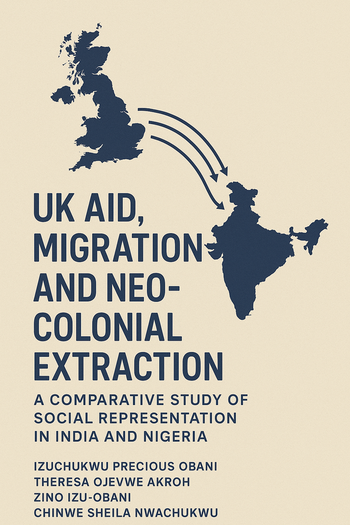
UK Aid, Migration, and Neo-Colonial Extraction: A Comparative Study of Social Representation in India and Nigeria

Izuchukwu Precious Obani, Theresa Ojevwe Akroh, Zino Izu-Obani,…

In an era defined by the "Global Britain" strategy and post-pandemic recovery efforts, the United Kingdom's engagement with former colonies through aid and migration frameworks continues to be portrayed as mutually beneficial development partnerships. This research demonstrates that these frameworks operate as sophisticated mechanisms of neo-colonial extraction, systematically transferring both financial and human capital from postcolonial states to the metropole. Through comparative analysis of India and Nigeria, this study examines how contemporary UK aid and migration policies reshape social representations, collective identity constructs, and indigenous knowledge systems. Employing a mixed-methods approach, including surveys (N = 800) and 80 in-depth interviews conducted in 2024, we investigate how aid discourses and migration aspirations interact to produce culturally hybrid but psychologically destabilized identities. Quantitative analysis reveals a strong correlation between the escalating financial burdens of migration (including the 66% IHS surcharge increase in 2024) and perceptions of extractive UK relationships (r = 0.67, p < .01). Qualitative findings further demonstrate that migration and aid collectively reorient youth futurity toward external validation while systematically marginalizing indigenous knowledge systems. We argue that UK development and migration policies sustain a form of cultural dependency that reproduces colonial hierarchies under the veneer of mutual benefit, with significant implications for both source countries and the UK's ethical standing in a multipolar world.

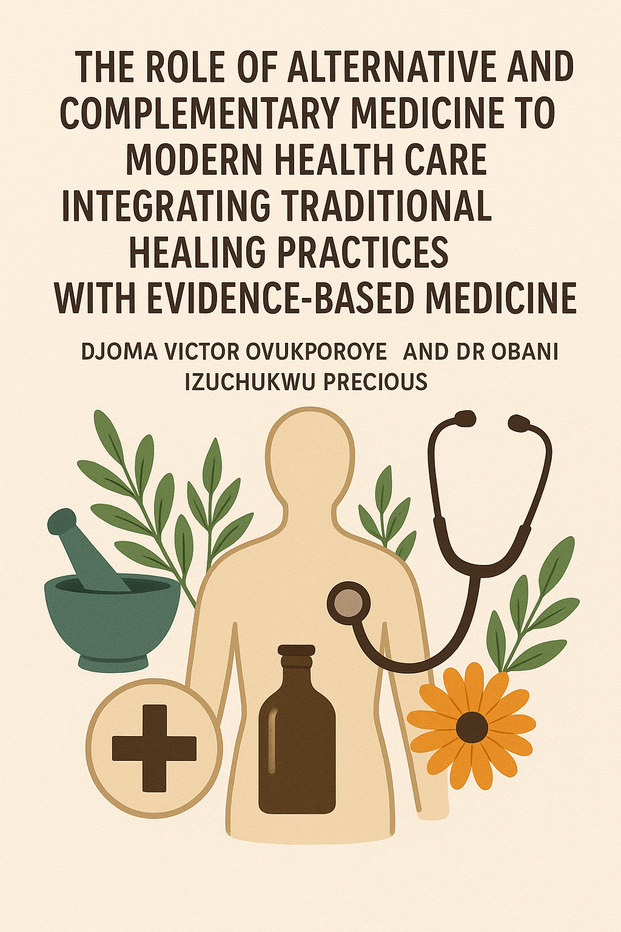
The Role of Alternative and Complementary Medicine in Modern Health Care: Integrating Traditional Healing Practices with Evidence-Based Medicine

Djoma Victor Ovuakporoye, Dr Obani Izuchukwu Precious

Alternative and Complementary Medicine (ACM) has gained global recognition as an essential component of modern healthcare, bridging traditional healing practices with evidence-based medicine. While conventional medicine remains the dominant healthcare approach, many individuals turn to ACM for holistic treatment, symptom management, and overall well-being. This paper explores the role of ACM in contemporary healthcare systems, examining its benefits, challenges, and integration with conventional medical practices. The study highlights key ACM modalities, including herbal medicine, acupuncture, chiropractic care, naturopathy, and mind-body therapies, analyzing their efficacy through scientific research and cultural perspectives. The increasing acceptance of ACM by medical professionals and policymakers is driven by patient demand, scientific validation, and the pursuit of a more patient-centered approach to healthcare. However, concerns regarding standardization, regulation, and potential interactions with conventional treatments pose significant challenges. Using a multidisciplinary lens, this paper advocates for a balanced integration of ACM with mainstream medicine, emphasizing the need for rigorous clinical research, regulatory frameworks, and collaborative healthcare models. By fostering an evidence-based approach, ACM can complement conventional medicine, offering personalized and culturally sensitive healthcare solutions that enhance patient outcomes.

Blog & Insights

Insight

The Magnetic Standard

The Church is not an application found in a digital store, forever pending an update to remain compatible with the times. It is not a program we download and customize to suit our personal preferences